
Kagurazaka’s “sanZi” Pioneers the Potential of Local Cuisine and Non-Alcoholic Beverages
- reina yokoyama
- Mar 23
- 9 min read

──Alongside our carefully selected craft beers from across the country, what non-alcoholic beverages should we offer?

Located just a one-minute walk from Kagurazaka Station, the craft beer bar “sanZi” is housed in a renovated building that once served as a tofu shop dating back to the Taisho era. The venue was launched by three individuals with no prior experience in the food and beverage industry. Guided by a clear concept of curating “local Japanese ingredients,” the bar offers a selection of distinctive craft beers and craft sakes from across Japan, paired with spice-infused dishes.
In an interview with Mr. Hamasaki and Mr. Aizawa of sanZi, we discussed the process of launching the business despite having no prior experience in the food and beverage industry, their concept of “An Introduction to Local Japanese Ingredients” centered around craft beer, and their method for selecting non-alcoholic drinks based on the criterion of “pairing well with food”—as well as how these factors influence the customer experience and the overall impression of the establishment.
Why Three People with No Experience in the Food and Beverage Industry Chose “Sakagami” in Kagurazaka

The restaurant is run by three members with diverse backgrounds. What they had in common was not experience working in the food service industry, but rather a “genuine interest in food and drink.” They enjoyed traveling across the country to visit restaurants and producers and sharing their experiences on Instagram, and it was this shared hobby that brought the three of them together.
They initially started by renting space in Omotesando, and after building a track record, they officially opened their current location in Kagurazaka about two years ago. The location they chose is in the area known as “Sakaue” (Upper Slope) within Kagurazaka. Unlike the “Sakashita” (Lower Slope) area, it is a quieter, more relaxed neighborhood, attracting many customers in their 30s and 40s who appreciate the calm atmosphere.
The property is a renovation of the former site of “Yamamoto Tofu Shop,” which had been in business since the Taisho era. They are striving to carry on the legacy of this beloved local shop and blend seamlessly into the community, despite being newcomers. Currently, Mr. Hamasaki handles management, media relations, and event planning, while Mr. Aizawa is in charge of customer service and beer selection, allowing them to operate the business by leveraging their respective areas of expertise.

The name of the restaurant, “sanZi,” carries multiple meanings. Since it refers to “eating a meal” in Chinese, it embodies the idea of “eating together.” The logo combines the Chinese character for “three” with the spelling “zi” to convey this sentiment.
“‘Zi’ means ‘things of the land.’ We want to create a relationship where these three parties—the ‘people who produce local goods,’ such as wonderful farmers and manufacturers; the ‘customers’ who actually eat and enjoy them; and us, the members of SanZi, who ‘share the story’—are connected in a beautiful triangle,” says Mr. Hamasaki.

“Local Japanese Products: An Introduction” — Bridging the Gap Between Japanese Craft Beverages and Handicrafts
The concept behind our dining experience is to offer guests the chance to experience “local Japanese ingredients.” For example, we aim to serve as a bridge connecting microbreweries from across the country with Japanese consumers and travelers from around the world.
“Small-scale producers in rural areas often have a single representative handling sales, PR, and management all by themselves. It’s also quite difficult for them to conduct business in Tokyo’s main commercial districts. Given that situation, I thought there must be many areas—such as PR—where we could offer our assistance,” said Mr. Hamasaki.

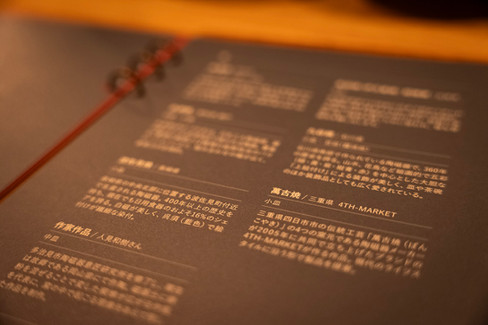


Furthermore, the restaurant has selected Japanese crafts for its tableware, cutlery, and glassware. For example, by using Ohori Soma-yaki pottery (Matsunaga Kiln) from Fukushima Prefecture, the design allows guests to experience “local Japanese products” not only through the beverages but throughout the entire space. Rather than positioning itself as an exclusive specialty shop for connoisseurs, the restaurant positions itself as an “introductory” destination for first-time visitors, providing an opportunity to step into the new world of craft beverages and domestically produced tableware.
However, the owner admits that during the initial launch phase, the desire to carry a wide variety of products led to a period where the brand’s core identity was not yet firmly established.

“At first, we carried a wide variety of alcoholic beverages, but we felt our direction was becoming too vague, so we decided to simplify things. By centering our offerings around the eight craft beer taps we always have on tap, we’ve been able to narrow down our selection of alcoholic drinks while expanding our range of domestic non-alcoholic options. This has clarified our concept of showcasing local products,” says Mr. Hamasaki.
While focusing on craft beer and craft sake, the establishment has expanded its selection of non-alcoholic beverages—which are “local Japanese products”—to create a space where even those who don’t drink alcohol can enjoy themselves. Creating an environment where everyone feels comfortable is what defines Sanji today.


From “liver rest days” to “toasting with your partner”—the growing world of non-alcoholic drinks
The reason why this craft beer bar began focusing on non-alcoholic beverages is partly due to Mr. Hamasaki’s own constitution.
“I like alcohol, but I’m not very tolerant of it, so I’ve had plenty of opportunities to drink non-alcoholic beverages. Just as I was thinking about expanding the possibilities of non-alcoholic drinks, I came across Apoptosis’s green tea sparkling drink at a restaurant in Ebisu and thought, ‘This is it!’” (Mr. Hamasaki)
This encounter marked the start of a serious effort to expand the non-alcoholic menu. Even now, he continues to sample new products and regularly update the menu, always exploring new possibilities. Today, the bar is popular not only with customers who cannot drink alcohol, but also with regulars who are “taking a break from drinking” or “planning to go to the gym afterward,” as well as customers who simply want to enjoy a delicious drink while their partners savor their favorite craft beers.

Product selection focused on pairing—the key to success is “not too sweet”
At Saji, we currently offer a variety of unique non-alcoholic beverages, including Apoptosis’s hojicha sparkling tea, Coco Farm’s peach juice, Nishiji Foods’ citrus juice (yuzu), and Koyodo’s ginger ale. Our selection criteria are clear.
“Drinks that are too sweet don’t pair well with food. When considering pairings, it’s important to find a balance that complements the flavors of the dishes. That’s one of our selection criteria,” says Mr. Aizawa.

Apoptosis’s Hojicha Sparkling Tea is served with a custom label designed by Saji, and it stands out as a particularly versatile option among non-alcoholic beverages.
“The sparkling element gives it a refreshing quality, but the hojicha also provides a rich, roasted depth, so it pairs well with delicate dishes like cheese, as well as hearty, spicy dishes like mapo tofu. It’s easy to pair with food, making it a great recommendation,” says Aizawa.

The label also reflects a thoughtful design philosophy. Named “Koboku Seiha” (literally, “Dead Tree, Fresh Leaves”), it evokes the image of something “coming back to life”—a reference to the story of how hojicha was born when tea stems, previously discarded in large quantities as useless, were roasted and sold. This name embodies the restaurant’s approach to uncovering the charm of local ingredients and bringing them to customers.
A selection of non-alcoholic beverages that reflects the restaurant’s dedication and hospitality
Offering a wide variety of non-alcoholic drinks not only increases satisfaction among customers who don’t drink alcohol but also plays a major role in shaping the overall impression of the restaurant.
Aizawa points out that people who order non-alcoholic drinks often don’t fully appreciate the joy of food and drink pairing. That’s precisely why he believes there should be restaurants where customers can discover that pleasure. The restaurant’s policy of supporting small-scale, unique producers naturally extends to non-alcoholic beverages as well.
The impression customers get is vastly different from that of a restaurant that offers only standard options like orange juice or oolong tea. Aizawa explains the impact this difference has on the customer experience as follows.

“Of course, this applies to customers who order non-alcoholic drinks, but even those who drink alcohol will get the impression, when they look at the menu, that we’ve put thought into our non-alcoholic options as well. I believe this leaves a lasting impression on customers—a sense that ‘this is a place that really cares about the details’—in a way that goes beyond words,” says Mr. Aizawa.
Furthermore, these carefully crafted non-alcoholic drinks are contributing to an increase in average customer spending. Offered at prices that are competitive with alcoholic beverages, these premium non-alcoholic options play a vital role in the restaurant’s financial performance.
An anniversary craft beer that embodies the spirit of “connecting producers”
The company is also actively involved in product development. A prime example is the “Hojicha Craft Beer” developed to commemorate the store's first anniversary.

To capture a sense of Japanese authenticity while ensuring the beer had a distinct character that could hold its own against craft beers, we experimented with various tea leaves alongside the Apoptosis team and ultimately selected “Charcoal-Roasted Stem Hojicha.” We aimed to express the region’s identity using tea leaves roasted with traditional charcoal-roasting techniques passed down locally in Shizuoka, while also targeting the growing number of foreign tourists. The beer has been well-received not only by regulars but also by new customers.
“If we were going to create an original beer for our anniversary, I didn’t want it to be just a commemorative item—I wanted it to have real meaning. As we returned to the origins of our restaurant and considered ways to ‘connect producers with producers,’ this aligned perfectly with a project we were already working on for a hoji-cha tea with a custom label, so we decided to make a beer using tea. Given the local context and the growing number of international customers, everything just naturally fell into place, including how well it would appeal to them. The customer response has been excellent,” said Mr. Aizawa.
Decoding the Future of Non-Alcoholic Beverages Through Resolution, Enthusiasm, and Factorization
Mr. Hamasaki offers his unique perspective on the future of the non-alcoholic market. The key word is “resolution.”
“Increasing the ‘resolution’ of non-alcoholic beverages is the key to market expansion. If the offerings become segmented to the point where customers can communicate their preferences and mood of the day to the staff—much like with wine—the non-alcoholic market will grow even further,” says Mr. Hamasaki.

When it comes to wine, there is a common language—“white or red,” “dry or full-bodied”—but non-alcoholic beverages are still often lumped together under the umbrella term “soft drinks.” The first step toward creating enjoyable moments is to break down these categories—such as tea, syrups, and fermented beverages—and highlight items that suit each occasion and their unique characteristics.
“If you trace back the origins of any culture with a large fan base, I think you’ll find that it often stems from the immense passion of a single individual. I don’t believe anything without that passion can achieve mass appeal or truly take off,” says Mr. Hamasaki.
It is this “otaku”-like passion that builds the market. Just as there are enthusiasts for wine and sake, if communities with deep knowledge and affection emerge in the world of non-alcoholic beverages, the market will undoubtedly mature.
However, if we keep everything under the broad umbrella of “non-alcoholic,” preferences will remain too scattered, making it difficult to form communities. By classifying categories more finely, we can foster passionate fans for each one and create fertile ground for communities to grow. What Mr. Hamasaki refers to as “increasing resolution” is nothing other than enhancing the precision of curation—a practice that Sansai is already implementing through craft beer.
What the non-alcoholic market lacks right now is a “bridge” role
So where exactly is the shift in the non-alcoholic market beginning? Based on his firsthand experience in the field, Mr. Aizawa offers the following insight:
“I think a major wave of change is beginning in the non-alcoholic market. The impact of ‘Smart Drinking’ commercials has been significant, and I’ve seen special features on the topic in the media. However, it hasn’t really taken hold at the grassroots level yet. I get the sense that we haven’t quite found the right approach yet. That’s precisely why I believe initiatives like Apoptosis, which connect the front lines with producers, are truly vital.” (Mr. Aizawa)
Even if there are good products, the market won’t grow without a “bridge” to deliver those products and their stories to customers. Collaboration among producers, curators, and restaurants—with each playing their respective roles—will likely be essential for the further growth of the non-alcoholic market.
[Key Points of the Dining Experience]
Clear Concept: Positioned as an “introduction to regional Japanese specialties,” the menu centers on craft beer, with non-alcoholic beverages serving as a complementary offering. By limiting the selection of alcoholic drinks, we’ve expanded our range of domestic non-alcoholic options.
Pairing-Focused Selection: Our top priorities are “not too sweet” and “pairs well with food.” We regularly update the menu and continue to explore new possibilities through dialogue with our partners.
Contributing to the Restaurant’s Image: By offering non-alcoholic beverages with a unique story and attention to detail, we give customers the impression that this is a place where they can discover new options, which also leads to higher average check sizes.
【Apoptosis Products Currently Available at the Restaurant】


Sparkling Japanese Tea -Roasted Green- “Koboku Seiha”
Our signature sparkling hojicha tea. A versatile all-rounder that pairs well with meals.
Kohodo Ginger Ale
We offer the “Spicy” and “Extra Spicy” varieties from our lineup of four—Sweet, Spicy, Extra Spicy, and Refreshing—allowing you to enjoy choosing your preferred level of spiciness. We also combine these with our house-made ginger ale to enrich the variety.


If you’d like to learn about the latest trends in non-alcoholic beverages or try our recommended drinks, please contact us.
Apoptosis develops, curates, and provides a wide variety of non-alcoholic beverages for hotels and restaurants. Feel free to contact us via the Contact page.
Store Information:
SanZi ~Craft and Spice~
101 YM Building, 6-26 Kagurazaka, Shinjuku-ku, Tokyo 162-0825
Interview Cooperation: Sho Hamasaki, Nagaaki Aizawa
Interview Date: February 19, 2026


