
If it’s a non-alcoholic drink that pairs well with food, it can satisfy customers’ desire to have “just one more.”
- Mako Ozaki

- 18 hours ago
- 15 min read
How to Create a "Table Marriage" That Makes You Want to Order a Second or Third Glass—Even With Non-Alcoholic Drinks

As demand for non-alcoholic beverages grows, “how to handle non-alcoholic options” is becoming an unavoidable challenge for many restaurants. However, simply adding them to the menu is not enough. Only by creating an environment where non-drinking guests do not feel out of place and the entire table can enjoy the atmosphere equally—only then will non-alcoholic beverages contribute to both customer satisfaction and revenue.
At "Chez Fleur Yokohama," a Japanese-French restaurant in Yokohama, it is Mr. Hongo who brings this vision to life. His multifaceted career in the food and beverage industry—ranging from a historic hotel bar in Yokohama to sales at an importer, on-site management in retail and wholesale, and working as a sommelier at a luxury hotel—has shaped his unique philosophy known as "Table Mariage." Here, we introduce that philosophy and the specific techniques he has honed through hands-on experience.

"Delicious food" is now a given. The next competitive edge lies in "fun."
Mr. Hongo, who has spent many years working in the food and beverage industry, has noticed a change. Thanks to advances in winemaking and viticulture, wines that he would have dismissed as “bad” during his days as a salesperson are now virtually nonexistent. The same is true for food; in any restaurant of a certain standard, “delicious” is now a given.
“Just the other day, a customer told me, ‘It goes without saying that the food is delicious at a place like this. I really enjoyed myself today.’ Having customers say they had a good time before they leave is one of our goals.”
“How do we create ‘enjoyment’ beyond ‘deliciousness’?”—that is the fundamental question facing modern service industries. For example, Mr. Hongo points out that if all we do is serve fixed pairings exactly as outlined in the manual, anyone could do it.
"When you're doing pairings, it starts to look like a 2D world. 2D restaurants are boring. They just mechanically serve the same old things. I started thinking, 'Maybe a robot would be just as good.' In fact, AI already suggests pairings for us these days, doesn't it?"
Dynamic service tailored to “the moment, the person, and the table”—something only humans can provide. That is the starting point of the Table Mariage philosophy. During his time as an importer sales representative, Mr. Hongo was meticulous about “studying the chef’s specialties and recommending wines that complemented them.” “Will you serve the same dishes as last year, or will you change the sauce?” Through repeated conversations like these, he came to realize that “if you suggest something that truly suits the person, they will choose it naturally without any hard selling.” This experience forms the foundation of the Table Mariage philosophy: “pairing drinks specifically for the guest sitting right in front of you.”
Designing to Treat Non-Alcoholic Beverages as "Equal"
The key to table harmony is treating those who drink and those who don’t equally. Whether it’s a guest who apologetically orders a cup of oolong tea or one who feels self-conscious when splitting the bill—eliminating these “invisible divides” is what determines the overall satisfaction of the entire table.


There are three main points to keep in mind when putting this into practice.
① Show customers the extensive menu and bottle selection to encourage them to order one more round
At Chez Fleur Yokohama, non-alcoholic drinks are served in wine glasses to ensure guests don’t feel left out due to the difference in glassware. The menu features an equal selection of alcoholic and non-alcoholic options, and non-alcoholic drinks are presented on the table in bottles, just like wine. This approach offers guests who choose non-alcoholic drinks the experience of “time for themselves.” This presentation not only enhances customer satisfaction but also leads to a tangible increase in revenue.
"By displaying them side by side, we can create a 'one more buy' effect. Customers start thinking, 'I want to try this one, and that one too.' We've even seen a change in customers who used to only order a single glass of orange juice."
② Eliminate the sense of guilt by pricing it on par with alcohol
While setting low prices for non-alcoholic drinks may seem like a good deal at first glance, it can actually backfire by creating a disparity with alcoholic beverages. At Chez Fleur Yokohama, we’ve set the price at 3,300 yen for three drinks. By positioning this option on par with the 4,800-yen price for three glasses of wine, we eliminate the feeling that customers might feel guilty about ordering non-alcoholic drinks. For the restaurant, this also ensures that non-alcoholic drinks contribute to overall revenue.
③ Based on information such as origin and ingredients, we recommend the perfect cup for each customer
By discussing non-alcoholic beverages using the same vocabulary and with the same passion as wine, we elevate their status as beverages.
At the table, a scene like this often unfolds. Suppose the husband orders a glass of Merlot. The wife doesn’t drink alcohol. In that case, Mr. Hongo suggests, “Then let’s pair the wife’s drink with the same Merlot,” and recommends a 100% juice “Merlot” produced by the La Fruitière Takeuchi orchard. If they were drinking Bordeaux wine, he would recommend “Rouge Allure” (67% Cabernet Sauvignon, 31% Merlot, 2% Petit Verdot [2025]). Because the colors are similar, it looks as though both of them are drinking the same beverage.
“‘So this wine and this juice are both made from Merlot, huh?’ ‘Where is this bottle of Merlot from?’ ‘This one’s from Sicily.’ ‘I wonder how it differs from the Merlot from Nagano?’—that’s how the conversation starts. It really gets the conversation going at the table. Sometimes the husband will even place an additional order, saying, ‘Well, let’s compare it to a Bordeaux wine, then.’ When we have a selection of non-alcoholic drinks, the alcoholic ones sell better, too.”
They also ask, “Where are you from?” to learn about the guest’s hometown, and then craft a “story” tailored to the moment and the person—for example, offering Kyushu sake to guests from Kyushu or suggesting a non-alcoholic pairing within that context.
In addition, Mr. Hongo has recently been making a point of showing the menu and saying, “Whether you drink or not, everyone is treated equally.” He notes that adding this simple remark—in addition to the visual presentation—makes a significant difference in how non-drinking guests feel.
"When I put it into words, it seems like not drinking really lifts my spirits."
The impact of this design extends beyond those who don’t drink. It creates situations where guests who are drinking alcohol see the non-alcoholic drinks of those sitting with them and think, “I’d like to try that, too.” This is because non-alcoholic drinks are not seen as mere “substitutes for what one is missing out on,” but rather as interesting and appealing in their own right. Furthermore, from the outside, it looks as though the two people are drinking the same thing—and this natural scene creates a sense of unity around the entire table. That is the vision “Table Mariage” strives to achieve.

4 ice cubes, 100–120 ml: How a small-portion concept creates "the joy of choosing" and boosts average check size
To apply philosophy to the workplace, specific guidelines are necessary. While catering to the customer’s preferences is the top priority, Mr. Hongo follows a rule of “four ice cubes in a wine glass” when serving sparkling tea. Adding ice makes even a small amount—100 to 120 ml—appear visually sufficient and gives it the same appearance as wine.
"When you hear '100 milliliters,' it might sound like a small amount, but when you add ice, it looks like just the right amount."
We also use granite wine coolers from Ogaki, Gifu, for temperature control. This setup not only maintains the ideal temperature but also enhances the visual appeal of the drink when placed on the table. Each serving is 100–120 ml. While this may seem like a small amount, it is a deliberate design choice.
"Even when served in small portions, people tell us it’s delicious and ask for another round. This gives customers the pleasure of choosing their next drink, so they’ll happily have two or three glasses—even non-alcoholic ones."
By creating a flow that allows customers to enjoy a variety of drinks in small portions, we naturally encourage non-alcoholic drinkers to order “one more drink.” This shifts the pattern from the traditional “one glass of orange juice” to “two or three glasses.” This change not only improves customer satisfaction but also reliably increases the average customer spend.

Cultivating a Table Through Conversation: The Essence of a Service That "Creates Stories"
When the evening doesn’t end after just one glass, but flows into a second and third, the entire table comes alive through conversation. That is the essence of the “Table Mariage” that Mr. Hongo practices.
“One time, a customer told me, ‘I’ll leave the drink choice up to you.’ When I recommended a white wine that would pair well with the meal, the husband seemed hesitant. ‘Do you usually drink red?’ I asked. ‘Should we go with red, then?’ He replied, ‘Well, isn’t it customary to start with white?’ I suggested, ‘No, no—please just have whatever you’d like,’ and through that kind of conversation, the whole table comes alive.”
Rather than relying on fixed pairings, we read the room and design the overall dining experience for the entire table through ongoing conversation.
As symbolized by an anecdote from his days working at a restaurant in Hakone—when he suggested to a lady who couldn’t travel due to the pandemic, “I see, madam. Well then, shall we set off from Paris today and take a tour of France—with wine?”—which delighted her immensely—Mr. Hongo’s service is always centered on “crafting a story.”
Another pillar supporting high-quality service: employee efficiency
The quality of service that creates an “enjoyable” experience is directly linked to how well-rested the staff are. As Mr. Hongo has worked on organizational reform, he has consistently asked himself, “Is this procurement or this task causing staff to work overtime?”
"When we restructure the organization, we also switch suppliers. We’ll ask them, ‘This is great produce, but hasn’t it led to more overtime?’"
Quality and efficiency are often discussed as if they were a trade-off. However, Mr. Hongo takes the opposite view. If staff are exhausted, no matter how good the ingredients are, they cannot create a “joyful” experience. That is precisely why finding ways to reduce the workload on the front lines is an investment in maintaining service quality.
"I’ve come to realize that it’s actually easier to just work frantically to hit the numbers. It’s much harder to hit those numbers without putting in the work. So I’ve started thinking about how to avoid overworking myself. It’s not about cutting corners, but rather about how to maintain sales while doing so."
A telling example is the story of the wine glasses. Traditionally, wine glasses had to be polished by hand, one by one. However, by introducing high-performance dishwashers that eliminate the need for polishing, this labor-intensive task can be eliminated. In fact, the organizational reforms led by Mr. Hongo reportedly reduced overtime by about 300 hours per month.
This philosophy—that “the flexibility created by efficiency enhances service quality”—is also reflected in the selection of beverages. Apoptosis’s bottled and sparkling teas are RTD (Ready To Drink) products that deliver a high-quality non-alcoholic experience the moment you open the bottle and pour it into a glass. No special preparation or complex blending is required. This frees staff from unnecessary tasks, allowing them to devote that time and energy to conversing with guests—the practice of “table marriage.” The concept of “delicious just by opening” is not merely about convenience; it is also a design choice intended to preserve the essence of service.

The reasons for introducing Apoptosis are "flavor" and "visual appeal."
Mr. Hongo introduced Apoptosis after being recommended it by a chef he had met while working at the Westin Hotel Yokohama. The reason he chose Apoptosis from among the many non-alcoholic beverages available is clear.
"I’ve known about premium tea beverages like Royal Blue Tea for a while, but Apoptosis has a rich, savory flavor. It was absolutely delicious when paired with a meal."
The fact that it has umami also means it pairs exceptionally well with food. We decided to introduce it because we felt it was a perfect fit for the "Japanese-French" culinary style.
This choice is rooted in Mr. Hongo’s experience and expertise. In fact, Mr. Hongo is the kind of person who can “create” his own non-alcoholic drinks simply by combining ingredients. For example, adding oolong tea to a base beverage deepens its color, giving it a Bordeaux-like hue, while adding cranberry juice lightens it, resulting in a Burgundy-like tone. He can customize a non-alcoholic drink right at the table to match the color of the wine the guest is drinking.
"When you add oolong tea, it turns dark, so it takes on a Bordeaux-like appearance. When you add cranberries, it lightens, so it takes on a Burgundy-like appearance. You can actually make it match the color of the wine you're drinking right now."
Even though he has these “homemade” options available, Mr. Hongo chooses Apoptosis’s RTD (Ready to Drink) products because he trusts their quality. The fact that they’re so well-crafted they can be served straight from the bottle resonates precisely because he’s someone who trusts his own skills. It’s a flavor he can confidently say, “I want you to try this.”

In addition, the bottle’s visual appeal is a key factor. In a service where the story is told while displaying the bottle at the table, a visually striking presentation is essential. A look that instinctively prompts customers to reach for their smartphones helps ensure that the non-alcoholic beverage is remembered as “the drink of choice.” Mr. Hongo also has a clear perspective on how it differs from other premium tea beverages.
"I think Royal Blue Tea places a strong emphasis on aroma and color. Its clear hue makes it look like wine, so it would pair well in a wine bar or similar setting. On the other hand, I think Apoptosis is characterized by its ability to complement meals."

One such difference is the "cloudiness." When you pour Apoptosis bottled tea or sparkling tea into a glass, fine particles—similar to the sediment in wine—may float in the liquid.
"Some customers are surprised by the cloudiness. But it’s precisely this cloudiness that brings out the tea leaves’ unique characteristics and allows you to taste their rich umami. By explaining to customers that ‘this cloudiness is proof of the tea leaves’ umami,’ they can see, taste, and truly appreciate the quality."
This distinctive "cloudiness" stems from the unique production method employed by Apoptosis. By using the Cold Extraction Method®, every last bit of the tea leaves’ essence is extracted, allowing the tea’s natural umami, aroma, and complexity to be fully concentrated in the bottle. This is the result of prioritizing the depth of the tea’s natural flavor over visual clarity. It is this depth that truly shines when paired with food.
[Key Production Method] What is the Cold Extraction Method®?
A brewing method that takes time to slowly extract the aromatic compounds from the tea leaves. It allows the delicate aromas and umami compounds inherent to the tea leaves to be transferred into the liquid without being destroyed. Since aromatic and umami compounds—which would otherwise evaporate or degrade during typical high-temperature brewing—dissolve intact, the tea leaves’ inherent complex flavor profile is brought to the forefront. The “cloudiness” in Apoptosis is a testament to the tea leaf compounds produced by this method.
"Drinks are meant to complement the food. I see my role as finding a balance where drinks play a supporting role to the meal—perhaps a 6:4 ratio of food to drinks."

[Highlights of Chez Fleur Yokohama]
The Five Pillars Underpinning Takato Hongo’s Service Philosophy
In an era where “delicious” has become the norm, what must we do to provide “enjoyment”? From the philosophy of Table Mariage to specific service methods, operational efficiency, and beverage selection—we break down Mr. Hongo’s approach into five key pillars.
① “Fun” — The Next Competitive Axis Beyond “Delicious”
Thanks to advances in brewing and culinary techniques, a “delicious meal” is already a given at restaurants of a certain standard. The next competitive edge lies in whether customers leave saying, “I had a great time today.” Simply serving the same dishes mechanically turns a restaurant into a “two-dimensional” experience. What truly matters is dynamic service tailored to the moment, the person, and the table—service that cannot be replaced by AI.
② Table Mariage—Where drinkers and non-drinkers are treated as equals
Serve the wine in wine glasses, balance the menu equally between alcoholic and non-alcoholic options, and explicitly state, “Whether you drink or not, everyone is equal.” If the husband orders a Merlot, suggest to his wife, “The same Merlot, please.” Having the same variety on the table sparks conversation and livens up the atmosphere. Non-alcoholic drinks can even lead to additional orders of alcohol. By creating pairings based on guests’ hometowns, for example, a “story” tailored to the moment and the people brings the entire table together.
③ How to Serve Non-Alcoholic Beverages: Generating "One More Buy" Through the "Design" of Appearance, Portion Size, and Price
Four ice cubes in a wine glass, served in small portions of 100–120 ml. Temperature and visual appeal are managed using a granite wine cooler from Ogaki, Gifu. Priced at 3,300 yen for three non-alcoholic drinks, we place them on the same playing field as alcoholic beverages to eliminate any sense of "apology." By lining up bottles on the table, we naturally spark the thought, "I’d like to try this one too," encouraging customers to move from "just one glass of orange juice" to "two or three glasses."
④ The Importance of Efficiency: Staff "Breathing Room" Determines Service Quality
“It’s easy to just work frantically to hit your numbers. It’s much harder to hit your numbers without working that hard.”—What Mr. Hongo prioritizes is “figuring out how not to work.” By reviewing suppliers and introducing dishwashers that eliminate the need for hand-washing, he has reduced monthly overtime by 300 hours. Ensuring that staff aren’t exhausted and have some breathing room is the foundation for creating an “enjoyable” experience, and the selection of RTD products aligns with this philosophy.
⑤ Apoptosis—Umami, Visual Appeal, and “Cloudiness”
Its umami profile makes it a perfect pairing for meals, and it complements Japanese-French cuisine particularly well. The bottle’s elegant appearance makes for great photos and enhances a service that tells a story. Its distinctive cloudiness is proof that the cold extraction method has drawn out every last bit of the tea leaves’ essence. While it contrasts with the clear hues of Royal Blue Tea, the very experience of “tasting delicious when paired with food” is its true meaning, making it the bottle that best aligns with Mr. Hongo’s philosophy of a 60-40 ratio of food to drink.
[Apoptosis Products Currently Available at Chez Fleur Yokohama]
Rooibos Sparkling Tea - Sparkling Japanese Tea -Rooibos-

The rare rooibos green tea is layered with herbal notes, evoking aromas of blueberry, cranberry, aloe, and yogurt. Yet it offers a sophisticated, unsweetened flavor. A caffeine-free sparkling tea made with only tea leaves, water, and carbonation.
Sparkling Japanese Tea -Black-

A clear amber color. A fruity aroma reminiscent of berries, accented with sandalwood. A vibrant, elegant flavor unfolds alongside a soft effervescence. This sparkling tea showcases the unique complexity and body of "Benifuki," a Japanese black tea variety. Like rosé wine, it pairs well with a wide variety of dishes.
Smoked Black Sparkling Tea - Sparkling Japanese Tea -Smoked Black-

A rich, full-bodied sparkling tea with a fragrant smoky aroma that evokes the concentrated umami of bacon and bonito flakes. These smoked black tea leaves were developed by a tea farm that is committed to growing and processing its own tea, while preserving the "Chasoba" farming method—a Global Important Agricultural Heritage System (GIAHS) site in Shizuoka. By using a generous amount of tea leaves, the full aroma is captured in every bottle.
Kawane Green Tea Sparkling Tea -Kawane Green-

This sparkling tea was served as part of the culinary hospitality at the G7 Hiroshima Summit. The sharp umami and refreshing quality characteristic of Kawane tea evoke the essence of Japanese culture. With a fresh, green aroma that balances gentleness and elegance, along with a crisp finish and refreshing aftertaste, it complements even the most delicate dishes without overpowering them. It is highly regarded, particularly by Japanese chefs. Made with pesticide-free tea leaves from Kawane, Shizuoka Prefecture. Contains absolutely no additives, such as preservatives or artificial colors.
Bottled Green Tea: Apoptosis Green (Wazuka Tea Leaves, Kyoto Prefecture)

Tea fields nestled among the mountains of Wazuka, Kyoto Prefecture. Brewed using only tea leaves grown without pesticides—nourished by the mist and fertile soil—and water, with no added preservatives or sweeteners. It offers a floral, vibrant aroma and a sweet, rich fragrance reminiscent of brown sugar and honey. A refreshing, vibrant green note, complex umami, and a rich astringency that ties the flavor together.
Bottled Hojicha Tea: Murakami Roasted (Murakami Tea Leaves, Niigata Prefecture)
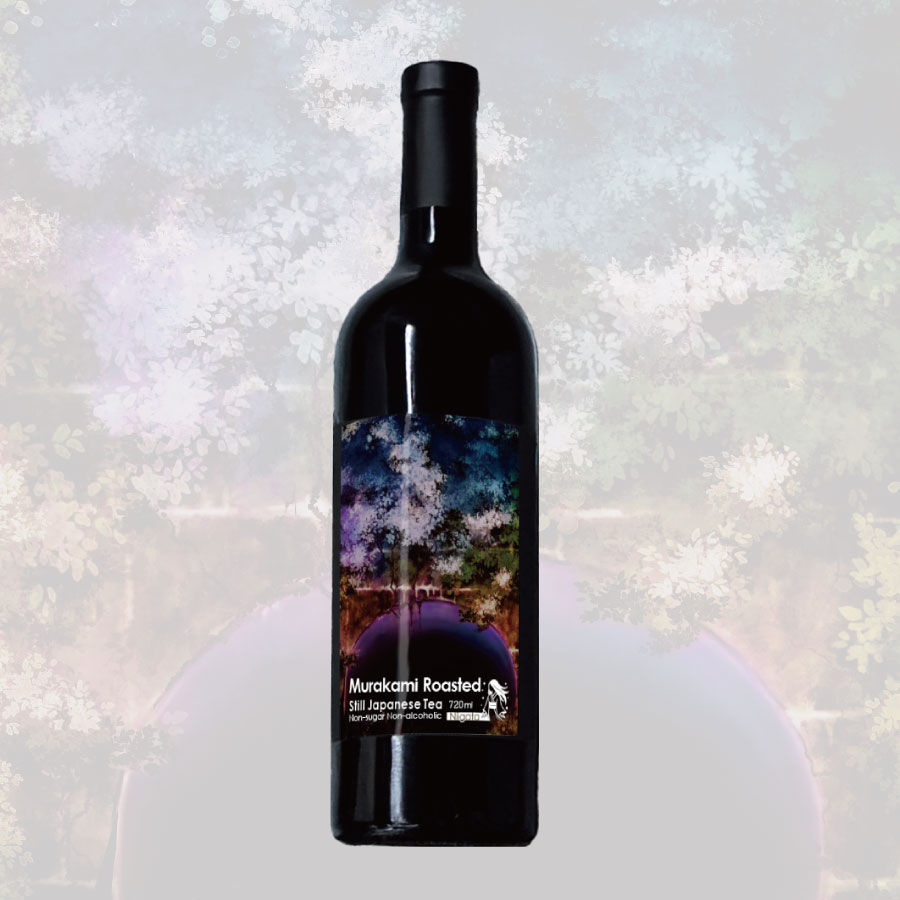
Made exclusively with pesticide-free tea leaves from Niigata Prefecture—grown with care and attention—and water, brewed without any preservatives or sweeteners. It features a crisp aroma and a light, refreshing acidity with notes of apple, lemongrass, ginger, and spices. Its exotic flavors stimulate the senses. Enjoy the rich, deep flavor born in a snow-covered region.
Bottled Oolong Tea: Masui Blue (Kawane Tea Leaves, Shizuoka Prefecture)

Grown without pesticides in the traditional tea farms of Kawane’s rural hills in Shizuoka Prefecture, this tea is brewed slowly using only the tea leaves and water, with absolutely no preservatives or sweeteners added. Classic yet modern, this distinctive and sensuous tea features a layered aroma reminiscent of Chinese tea, harmonizing with the umami characteristic of Japanese tea.
Sparkling Mugwort Tea - Sparkling Japanese Tea - (Made with mugwort tea leaves from Miyazaki Prefecture)

Made with a generous amount of pesticide-free mugwort tea leaves grown in Miyazaki Prefecture, nurtured by the abundant water flowing from the Kirishima Mountains, this tea is carefully brewed using only water, with no preservatives or sweeteners added. Its refreshing aroma, reminiscent of sandalwood and sage, is layered with distinctly Japanese flavors such as adzuki beans, persimmon leaves, and cherry blossom leaves, while also offering a soft sweetness reminiscent of walnuts and chestnuts.
La Fruitière Takeuchi, Juice de Raisin, 100% Grape Juice
A collection of wines that showcase the concentrated flavors and aromas of each grape variety. The range includes four varieties: Nagano Purple, Little Dancer (55% Viognier, 33% Merlot, 13% Cabernet Sauvignon), Merlot (48%), Cabernet Franc (7%), and Syrah (4%). (Little Dancer is no longer available.)


If you’d like to learn about the latest trends in non-alcoholic drinks or try some of our recommended beverages, please contact us.
Apoptosis develops, curates, and provides a wide variety of non-alcoholic beverages for hotels and restaurants. Please feel free to contact us via the Contact page.
Store Information:
Chez Fleur Yokohama
2-12-26 Kitako, Nishi-ku, Yokohama, Kanagawa 220-0004, Felice Yokohama 1F, Room S3
Special thanks to Takato Hongo (Manager and Sommelier)
Date of collection: March 2026


